Investing with ETFs: Why we need a “Saving January”
The start of the year is the perfect time to focus on saving. With persistently low interest rates, however, saving requires a clever approach. While traditional savings accounts offer security, investing can provide higher long-term returns. Ramon Vogt, Head of Wholesale Switzerland at the Asset Management of Zürcher Kantonalbank, explains how exchange-traded funds (ETFs) can offer an excellent option for achieving your financial goals.

At the beginning of the year, resolutions are in full swing: fitness and health take centre stage, and trends like “Dry January” or “Veganuary” are gaining popularity. However, few people have heard of a “Saving January” – simply because it doesn’t (yet) exist. This is unfortunate, as January is the ideal time to set aside money with a view to achieving personal savings or investment goals.
But why? Why does it make sense to look beyond traditional savings accounts and consider investing in securities? And why are ETFs particularly well-suited for this purpose? Let’s explore these questions.
Savings accounts vs. investments in ETFs: The challenge of low interest rates
Let’s start at the beginning. Everyone has financial goals – whether it’s higher education, the dream of owning a home and starting a family, or securing a comfortable retirement. Often, the question arises: Should I save or invest my money?
While savings accounts offer security, investing can provide higher long-term returns. This is especially true because savings accounts in Switzerland generate little to no returns in today’s persistent low-interest environment. In fact, savings rates often fall below the inflation rate, meaning that the purchasing power of saved money diminishes over time.
In contrast, investing involves putting money into securities such as stocks and bonds or into investment solutions like funds or ETFs. Although investments carry some risk due to market fluctuations, history has shown that capital market investments generally yield higher returns over the long term. Historical data reveals that diversified equity portfolios can offer attractive returns over extended periods, while funds and ETFs reduce the risk of losses through diversification. In essence, investing can help preserve the purchasing power of your savings and, under favourable market conditions, even grow your wealth.
Another key advantage of investing is the power of compound interest. This concept illustrates how investment returns can multiply over time. The idea is simple: when interest or returns are reinvested rather than withdrawn, your savings grow exponentially. The longer you invest, the more pronounced the compounding effect becomes.
Investing in ETFs: The early bird catches the worm
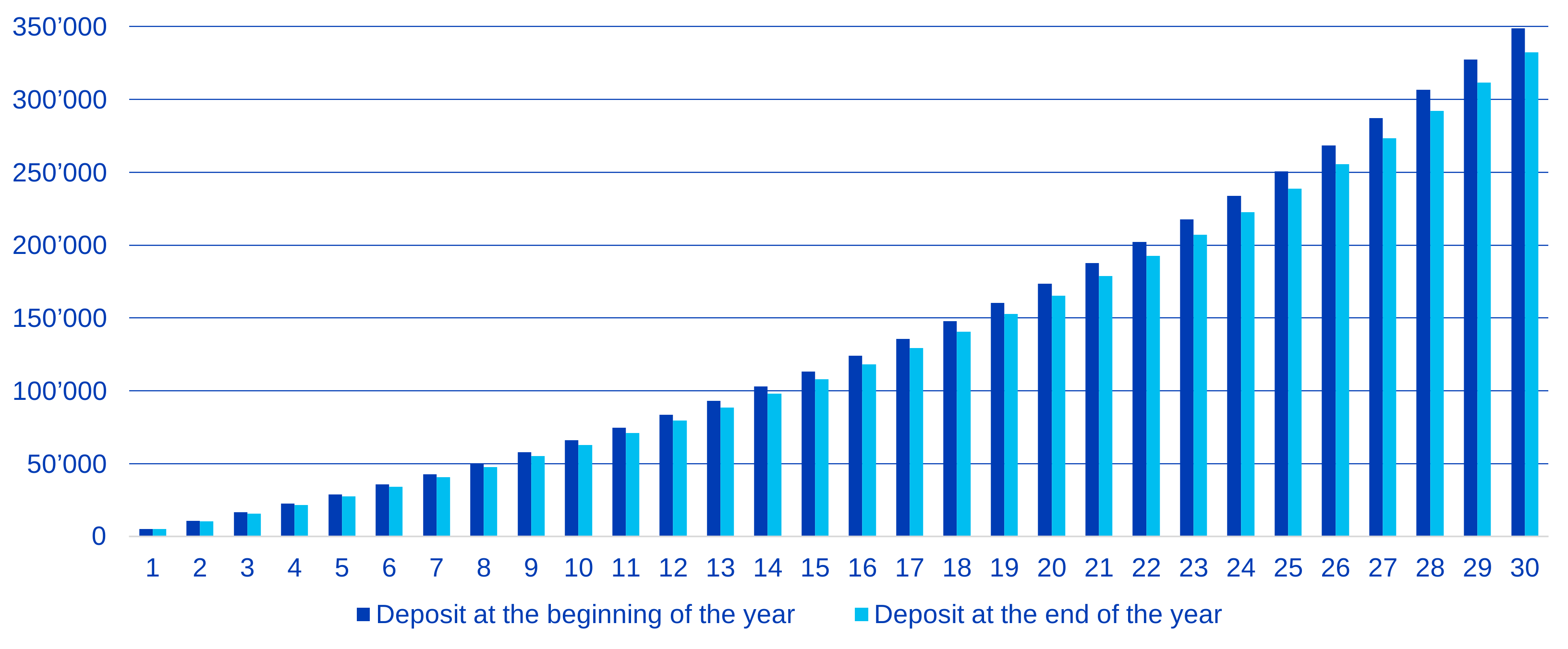
This is why it’s so important to start investing at the beginning of the year. The early bird catches the worm: by investing early, you maximise the time available to benefit from potential price increases and dividends.
Over time, this can lead to significant sums. For example, imagine investing CHF 5,000 annually in an ETF with an average return of 5%. If you invest the amount on 1 January each year, allowing it to grow throughout the year, you would accumulate approximately CHF 349,000 after 30 years. If, however, you invest the same amount on 31 December each year, the total would be around CHF 332,000 – a difference of CHF 17,000 simply because you missed out on 12 months of compounding each year.
Advance vs. arrears interest: The early bird catches the worm
Popular ETFs: High inflows reflect demand
This example demonstrates how the return potential of capital markets and the power of compounding can help investors achieve their savings goals and attain financial freedom. Investing is accessible even with small amounts and is straightforward, making it an attractive option for beginners.
ETFs are currently one of the most popular tools for long-term investing. These exchange-traded funds track the performance of a specific index, such as the Swiss Blue-Chip Index (SMI) or the global MSCI World Index. ETFs have experienced rapid growth in recent years. In Europe alone, ETFs attracted over USD 389 billion in 2025, according to industry data from etfbook.com.
This growth is no coincidence. ETFs offer several attractive features for investors:
The benefits of ETFs for long-term wealth building
- Cost-Effective: ETFs typically have lower fees than actively managed funds because they are passively managed, tracking an index without the need for active decision-making by a fund manager.
- Easy to Use: ETFs can be bought and sold on the stock exchange, requiring only a securities account to get started.
- Broad Diversification: By investing in an ETF, investors gain exposure to a wide range of companies, minimising the risk of total loss.
- Transparency: Since ETFs track an index, it’s usually easy to see which securities are included in the fund.
- Flexibility: ETFs are available for nearly all asset classes, regions, and industries, allowing investors to tailor their portfolios.
- Low Entry Threshold: Many ETFs allow investments starting from just a few hundred Swiss francs.
- Sustainability Options: Specialised sustainability-focused ETFs, such as the Swisscanto ESGeneration SDG ETFs, incorporate environmental, social, and governance (ESG) factors into their investment strategies (see box below).
How sustainability can be integrated into ETFs
To incorporate sustainable aspects into investments, ETFs often follow standard ESG indices. These indices consider environmental (E), social (S), and governance (G) criteria when constructing their reference indices. The four sustainable Swisscanto ESGeneration SDG ETFs stand out by using a proprietary sustainability methodology developed in-house by the Asset Management of Zürcher Kantonalbank. This approach combines the application of ESG criteria with a focus on the United Nations’ Sustainable Development Goals (SDGs). Only companies that make a positive contribution to the SDGs remain in the investment universe. This innovative, tailor-made approach is implemented using customised indices, which are calculated daily by an independent index provider.
Conclusion: Investing in ETFs pays off—the earlier, the better
While savings accounts offer security, investing can provide higher long-term returns. The power of compound interest highlights the importance of starting early and reinvesting returns. ETFs, in particular, are an attractive option for anyone looking to invest cost-effectively, easily, and with broad diversification. And starting at the beginning of the year can make a significant difference.