Emerging Market Fixed Income: These three themes will shape the market in 2026
Investments in Emerging Market bonds are on the verge of a transformation in 2026, explains Enzo Puntillo. He highlights the key themes and drivers that investors should be aware of in the coming months.

Key takaways on the opportunities in emerging market bonds:
- Emerging Market bonds made an impressive comeback in 2025. In 2026, we believe these investments are poised for a transformation.
- Inflation in these economies is expected to reach historic lows in 2026, supporting high real interest rates and attractive yields for creditors of Emerging Market Fixed Income.
- In many emerging markets, real yields are not only positive but also significantly higher than in developed markets. We highlight the favourites.
As we look ahead to 2026, the landscape of Emerging Market Fixed Income (EM FI) is poised for significant transformation. Investors are increasingly recognizing the potential of EM bonds as a compelling asset class, especially after witnessing stellar returns between 14-19% in 2025 (the former HC and the latter for LC Currency). Last year marked a turning point for EM FI, as it delivered significant outperformance versus developed market fixed income (DM FI) for the first time in over a decade. This resurgence has reignited interest in EM bonds, as investors seek to capitalize on the unique opportunities presented by these markets. However, it is important to note that past performance is not a reliable indicator of future results.
In this article, we explore three key themes that we believe will define the year 2026 for EM FI. These are:
- Historically low inflation in emerging markets
- High real yields
- Better-than-expected GDP growth rates in key economies
Together, these factors could create a promising environment for bond investors seeking attractive returns in a shifting global dynamic.
1. Historically low Inflation in Emerging Markets
One of the most striking developments in recent years has been the significant decline in inflation across many emerging markets. By 2026, inflation in these economies is expected to reach historical lows, both in absolute terms and relative to developed markets. In our opinion, this trend is driven by two key factors: the proactive response of many EM central banks, which acted early and decisively during the inflation spike of 2021-2022, and the increasing share of Chinese imports in EM economies, which has effectively exported disinflation and even deflation due to China’s low production costs
Inflation in Emerging Markets on track for historic lows (inflation rate in %)
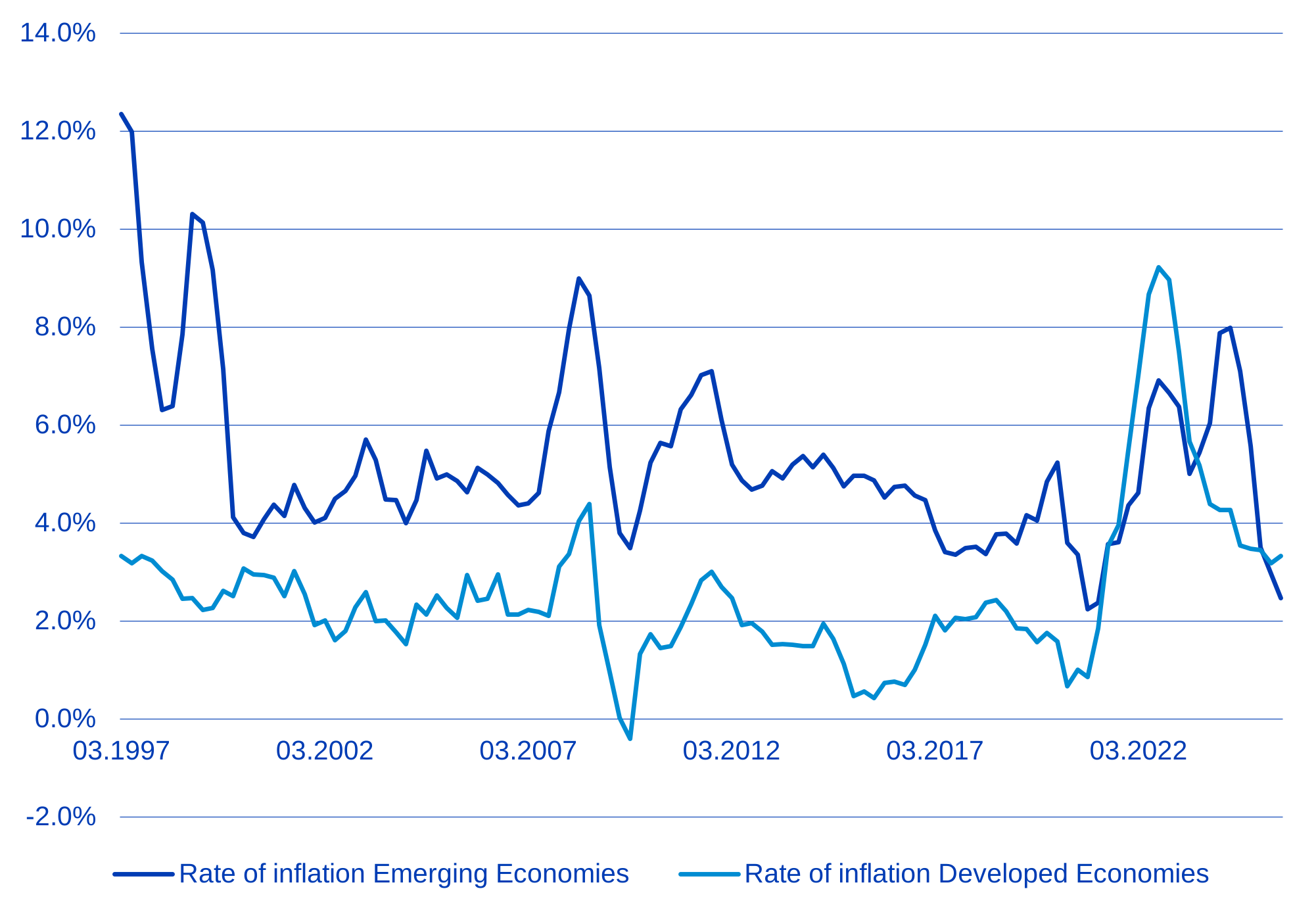
This low inflation environment is noteworthy for two key reasons:
- High real rates and attractive returns for bondholders: Lower inflation in emerging markets supports higher real interest rates (nominal bond yields minus inflation). For bondholders, this may translate into higher real returns, making EM bonds an increasingly attractive investment option. As inflation stabilizes at lower levels, central banks in emerging markets are likely to maintain relatively high nominal interest rates, providing a favorable environment for fixed-income investors. This is particularly relevant for example in countries like Brazil, Mexico, and South Africa, where central banks have already implemented tight monetary policies to combat past inflationary pressures. As inflation continues to fall, these economies are expected to offer some of the most attractive real yields globally, creating opportunities for investors to lock in compelling returns.
- Reduced depreciation pressure on EM currencies: Beyond the obvious benefits of higher real rates, lower inflation in emerging markets also has a less apparent but equally significant impact: reduced depreciation pressure on EM currencies. When inflation in emerging markets is low(er) than in developed markets, the relative purchasing power of EM currencies can improve. This means that EM currencies are less likely to depreciate in real terms, and in some cases, they may even appreciate. This dynamic is rooted in the theory of purchasing power parity (PPP), which suggests that exchange rates should adjust to equalize the price levels of goods and services between countries over time. With lower relative inflation, EM currencies are less likely to lose value, providing an additional layer of stability and potential upside for investors in EM FI.
2. High real yields
One of the most compelling reasons to consider EM FI in 2026 is the availability of high real yields in several key markets. Real yields, which measure the return on bonds after accounting for inflation, are a critical metric for fixed-income investors. In many Emerging Markets, real yields are not only positive but also significantly higher than those in developed markets, even when compared to long-term historical averages.
Countries like Brazil, Mexico, South Africa and even Turkey stand out in this regard. Brazil, for instance, has long been known for its high interest rates, and with inflation now under control, real yields (around 9-10%) in its local bond market are among the most attractive globally. It is worth noting, however, that past performance is not a reliable indicator of future results. Similarly, Mexico offers a stable macroeconomic environment and competitive real yields, making it a favored destination for fixed-income investors.
Attractive Real Yields in Emerging Markets – Brazil (Yields in %)
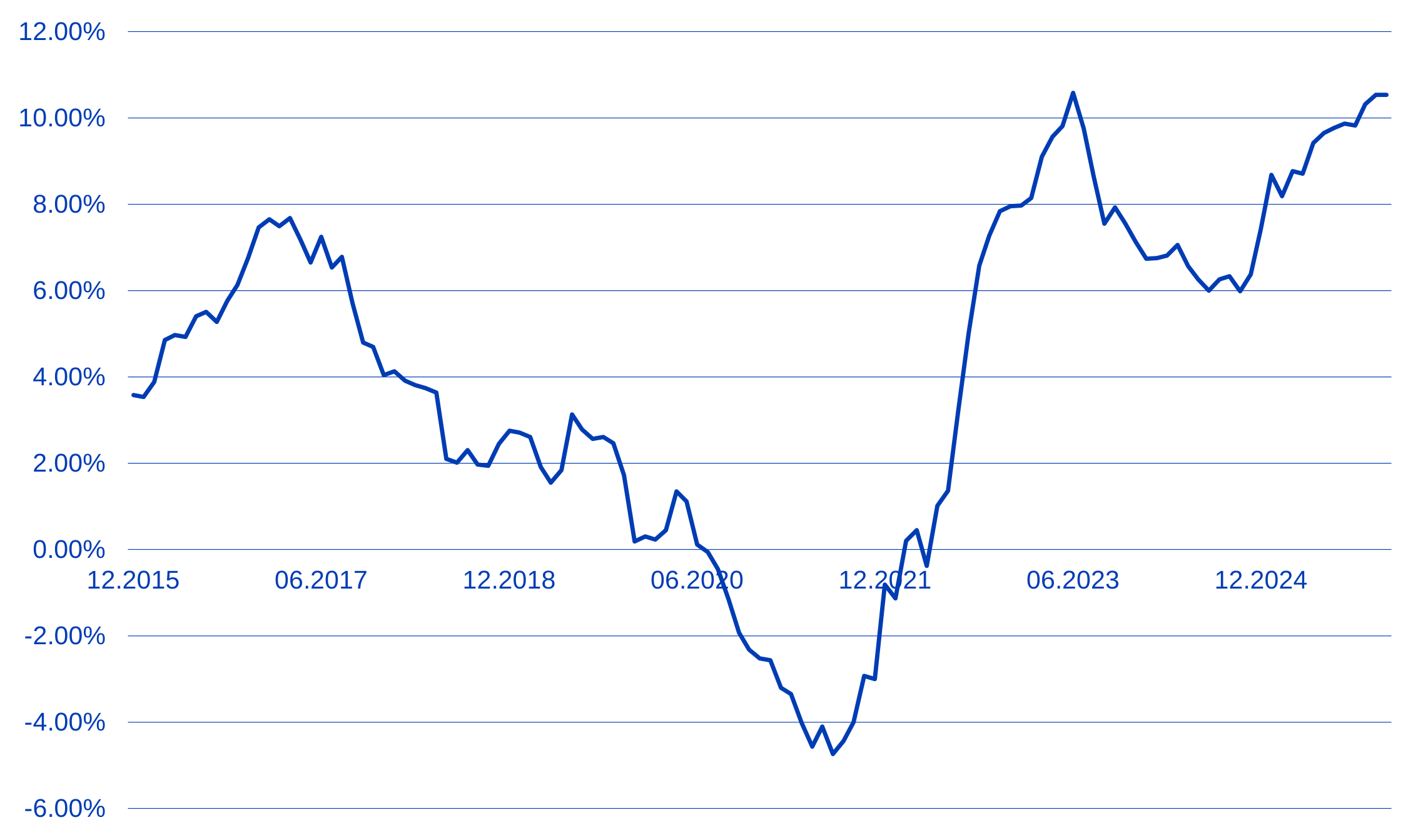
Even Turkey, which has faced economic challenges in recent years, is now presenting a unique opportunity. With central bank rates still elevated and inflation on a downward trajectory, Turkish bonds are offering compelling real yields that could translate into strong total returns over the next 12 to 36 months.
For investors seeking yield in a low-rate global environment, these opportunities in EM FI seem hard to ignore. The combination of high real yields and improving macroeconomic fundamentals may create an attractive case for allocating capital to Emerging Market bonds.
3. Better-than-expected GDP growth rates in key Emerging Markets
Another key theme for 2026 is the resilience and growth potential of emerging market economies. Despite concerns about global economic headwinds, many EM countries are delivering better growth rates than the market perceives. This is particularly true for economies that have implemented structural reforms and diversified their growth drivers.
- Gradual stabilization and long-term potential in China: China, the world's second-largest economy, has faced challenges in recent years due to the bursting of its real estate bubble. While the situation remains complex, there are early signs of stabilization. Housing prices have been correcting meaningfully, and the inventory of unsold properties is gradually declining—often a positive early indicator for recovery in the years ahead. That said, prices may continue to decline further in 2026 as the market works through these imbalances. However, there is potential for a more balanced and stable housing market by 2027, which could provide a stronger foundation for economic growth.
Additionally, concerns about China falling into the so-called "middle-income trap" appear overstated. The country continues to evolve its economic model, moving up the value chain and strengthening its position as a global leader in technology and innovation. These structural shifts are likely to support sustained growth over the long term. - Broad-based growth across emerging markets: Beyond China, other emerging markets are also demonstrating resilience and growth potential. Countries in Asia, Latin America, and Africa are leveraging demographic advantages, technological advancements, and policy reforms to drive economic expansion. For fixed-income investors, stronger-than-expected GDP growth in EM countries enhances the return potential for various Emerging Market assets, further bolstering the case for particular EM local FI.
Conclusion: A promising outlook for Emerging Markets Fixed Income in 2026
As we enter 2026, emerging market fixed income is set to benefit from a unique combination of macroeconomic tailwinds. Record-low inflation, high real yields, and better-than-perceived GDP growth rates are creating an environment that is highly favorable for bond investors. Countries like Brazil, Mexico, South Africa and even Turkey are leading the way, offering some of the most attractive real yields globally, while the broader Emerging Market universe is poised to deliver robust economic growth.
By carefully selecting markets and assets, investors can position themselves to capitalize on the opportunities that this dynamic asset class has to offer.
Legal notices
Legal notices
Legal information regarding the graphics:
“BLOOMBERG®” and the Bloomberg indices listed herein (the “Indices”) are service marks of Bloomberg Finance L.P. and its affiliates, including Bloomberg Index Services Limited (“BISL”), the administrator of the Indices (collectively, “Bloomberg”) and have been licensed for use for certain purposes by the distributor hereof (the “Licensee”). Bloomberg is not affiliated with Licensee, and Bloomberg does not approve, endorse, review, or recommend the financial products named herein (the “Products”). Bloomberg does not guarantee the timeliness, accuracy, or completeness of any data or information relating to the Products.
Legal notice Switzerland
This document is for information and advertising purposes only. It is intended for distribution in Switzerland and is not intended for investors in other countries.
It does not constitute an offer or a recommendation to purchase, hold or sell financial instruments or to obtain products or services, nor does it form the basis for a contract or an obligation of any kind. The recipient is advised to review the information, possibly with the assistance of an advisor, to determine its compatibility with their personal circumstances as well as its legal, regulatory, tax, and other implications. The information contained in this publication may be adjusted at any time.
The document was prepared by Zürcher Kantonalbank with customary due diligence and may contain information from carefully selected third-party sources. However, Zürcher Kantonalbank provides no warranty as to the correctness and completeness of the information contained therein and accepts no liability for damages resulting from the use of the document or information contained therein.
Unless otherwise stated, the information refers to Zürcher Kantonalbank's asset management under the Swisscanto brand, which primarily includes collective capital investments under Swiss, Luxembourg and Irish law (hereinafter referred to as "Swisscanto funds").
The investment opinions and assessments of securities and/or issuers contained in this document have not been prepared in accordance with the rules on the independence of financial analysts and therefore constitute marketing communications (and not independent financial analysis). In particular, the employees responsible for such opinions and assessments are not necessarily subject to restrictions on trading in the relevant securities and may in principle conduct their own transactions or transactions for Zürcher Kantonalbank in these securities.
The sole binding basis for purchasing Swisscanto funds is the current fund documents (e.g. fund agreements/contractual conditions, prospectuses, key investor information or basic information sheets as well as annual reports), which can be obtained from products.swisscanto.com/, Swisscanto Fund Management Company Ltd., Bahnhofstrasse 9, CH-8001 Zurich (also representative of the Luxembourg Swisscanto funds) or from all branch offices of Zürcher Kantonalbank. The paying agent for the Luxembourg Swisscanto funds in Switzerland is Zürcher Kantonalbank, Bahnhofstrasse 9, CH-8001 Zurich.
Carne Global Fund Managers (Schweiz) AG is the representative for funds domiciled in Ireland. Zürcher Kantonalbank is the paying agent for the Irish Swisscanto funds in Switzerland and Luxembourg funds.
It should be noted that any information about historical performance does not indicate current or future performance, and any performance data provided may not consider the commissions and costs incurred when issuing and redeeming fund units. Any estimates regarding future returns and risks contained in the document are for informational purposes only. Zürcher Kantonalbank does not provide any guarantee for this.
Every investment involves risks, especially with regard to fluctuations in value and return.
In terms of any sustainability information, please note that there is no generally accepted framework or list of factors in Switzerland that has to be considered in order to ensure the sustainability of investments.
For Irish and Luxembourgish Swisscanto funds, information on sustainability-related aspects in accordance with the Disclosure Regulation (EU) 2019/2088 is available at products.swisscanto.com/.
The products and services described in this publication are not available to US persons in accordance with the applicable regulations. This publication and the information contained in it must not be distributed and/or redistributed to, used or relied upon by, any person (whether individual or entity) who may be a US person under Regulation S of the US Securities Act of 1933. US persons include any US resident; any corporation, company, partnership or other entity organized under any law of the United States; and other categories set out in Regulation S. Status of the data (unless otherwise stated): 03.2025
© 2025 Zürcher Kantonalbank. All rights reserved.
Legal notice international
This document only serves advertising and information purposes and is not directed at persons in whose nationality or place of residence prohibit access to such information under applicable law. Where not indicated otherwise, the information concerns the collective investment schemes under the law of Luxembourg managed by Swisscanto Asset Management International S.A. (hereinafter "Swisscanto Funds"). The products described are undertakings for collective investment in transferable securities (UCITS) within the meaning of EU Directive 2009/65/EC, which are governed by Luxembourg law and subject to the supervision of the Luxembourg supervisory authority (CSSF).
This document does not constitute a solicitation or invitation to subscribe or make an offer to purchase any securities, nor does it form the basis of any contract or obligation of any kind. The sole binding basis for the acquisition of Swisscanto Funds are the respective published legal documents (management regulations, sales prospectuses and key information documents (PRIIP KID), as well as financial reports), which can be obtained free of charge at products.swisscanto.com/. Information about the sustainability-relevant aspects in accordance with the Regulation (EU) 2019/2088 as well as Swisscanto's strategy for the promotion of sustainability and the pursuit of sustainability goals in the fund investment process are available on the same website.
The distribution of the fund may be suspended at any time. Investors will be informed about the deregistration in due time.
The investment involves risks, in particular those of fluctuations in value and earnings. Investments in foreign currencies are subject to exchange rate fluctuations. Past performance is neither an indicator nor a guarantee of future success. The risks are described in the sales prospectus and in the PRIIP KID.
The information contained in this document has been compiled with the greatest care. Despite professional procedures, the correctness, completeness and topicality of the information cannot be guaranteed. Any liability for investments based on this document will be rejected.
The opinions and assessments contained in this document regarding securities and/or issuers have not been prepared in accordance with the regulations governing the independence of financial analysts and therefore constitute marketing communications (and not independent financial analyses). In particular, the employees responsible for such opinions and assessments are not necessarily subject to restrictions on trading the relevant securities and may, in principle, conduct their own transactions in these securities.
The document does not release the recipient from his or her own judgment. In particular, the recipient is recommended to check the information for compatibility with his or her personal circumstances as well as for legal, tax and other consequences, if necessary, with the help of an advisor. The prospectus and PRIIP KID should be read before making any final investment decision.
An overview of investors' rights is available at swisscanto.com/int/en/legal/summary-of-investor-rights.html.
The products described in this document are not available to U.S. persons under the relevant regulations (in particular Regulation S under the U.S. Securities Act of 1933). Data as at (where not stated otherwise): 03.2025
© Zürcher Kantonalbank. All rights reserved.