Three key themes for the 2026 stock market year
Notably, the major US tech companies contributed to a strong stock market year. Despite some signs of overvaluation, they are likely to remain powerful growth drivers in 2026. Meanwhile, positive real yields are coming under pressure, and emerging markets are standing out with robust growth – here’s why.
Stefano Zoffoli and Nicola Grass

Review: Record highs after a volatile first half of the year
The 2025 stock market year began on a positive note, particularly for European markets, while American tech stocks initially struggled. The emergence of DeepSeek, a Chinese competitor to American artificial intelligence (AI) models, cast doubt on the value of massive AI investments by US companies. However, after overcoming further turbulence triggered by US tariffs, equity markets steadily gained momentum and reached record highs. Global economic growth remained robust, while inflation saw a slight upward trend. Nonetheless, with global inflation staying within the acceptable range of 2–3%, central banks responded by lowering interest rates.
In Switzerland, inflation was not a significant concern, prompting the Swiss National Bank (SNB) to reduce its key interest rate to 0% due to the strength of the Swiss Franc (CHF). Long-term interest rates declined slightly over the year, resulting in an overall average performance.
The weak USD left its mark on a EUR portfolio. Nevertheless, a balanced portfolio achieved an encouraging performance of 7%.
Our Three Key Themes for 2026

1. Tech boom with a focus on quality
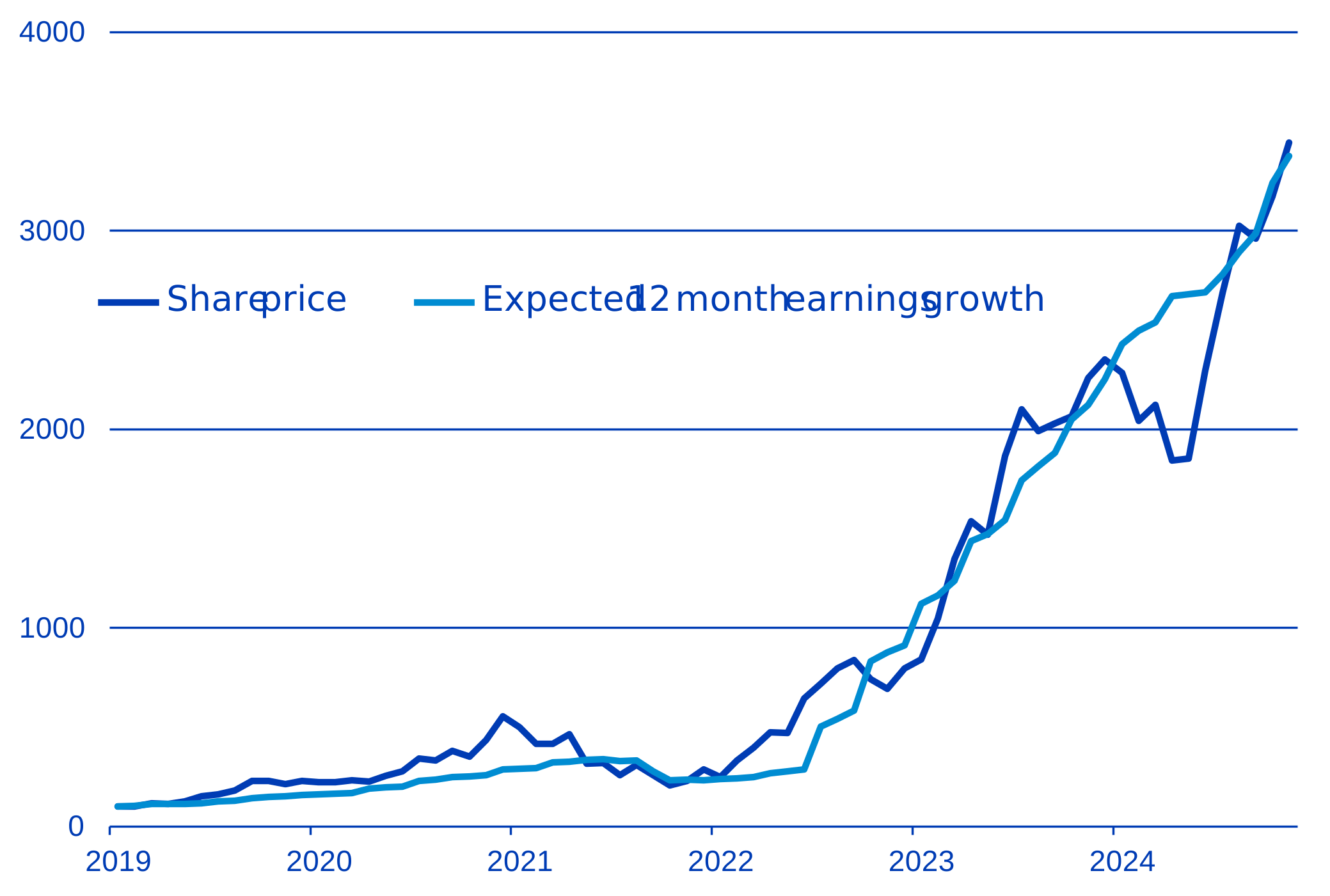
We expect hyperscalers – providers of high-performance cloud data centres – to maintain their market dominance and continue to deliver above-average performance. While valuations are somewhat elevated, they are not yet in extreme territory, and investor sentiment remains measured. What could make us more cautious about tech stocks? A key factor will be whether companies can continue to generate free cash flow. We would adopt a more cautious stance if significant investments increasingly rely on debt financing, if earnings growth fails to keep pace with valuations, or if AI companies become more intertwined without generating real cash flows.
Conclusion: Early signs of a potential bubble are visible, but in our view, there’s no immediate reason to burst it just yet.
Earnings growth supported – Nvidia stock price and earnings expectations indexed to 100
2. Farewell to positive real yields
Real yields in Europe have already dropped to around 0% this year, and we expect a similar trend in the US. The Federal Reserve has abandoned its 2% inflation target and is lowering interest rates despite inflation exceeding 3%. High global fiscal spending is likely to drive government debt even higher, while US tariffs could push up domestic goods prices. As a result, positive real yields are expected to disappear in the US as well. In this environment, real assets such as real estate and gold remain attractive, while nominal assets appear less appealing.
3. Emerging markets gaining momentum
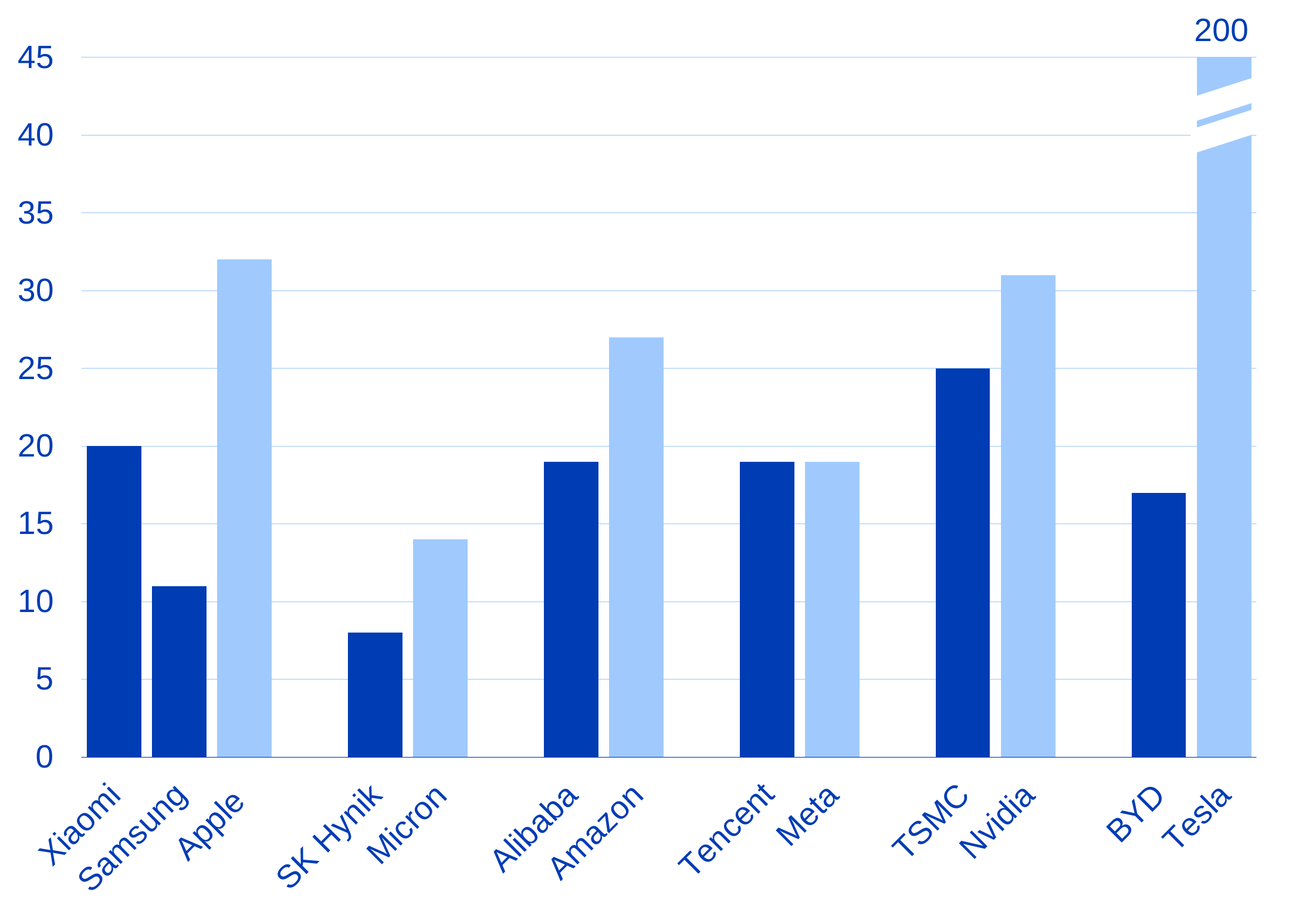
We believe growth in emerging markets will continue to significantly outpace that of developed economies. Inflation rates in these regions are declining and converging with those of developed markets, making real yields particularly attractive. Notably, many Asian countries are well-positioned to benefit from the megatrend of AI. Additionally, numerous technology companies in these regions are valued more attractively than their Western counterparts. The relative strength of emerging market equities increased significantly in the second half of 2025. We expect this trend to continue and therefore maintain a preference for emerging market equities and bonds.
Price-to-Earnings Ratio (P/E) of Key EM Stocks Compared to Their Western Counterparts
Implications for Investment Strategy
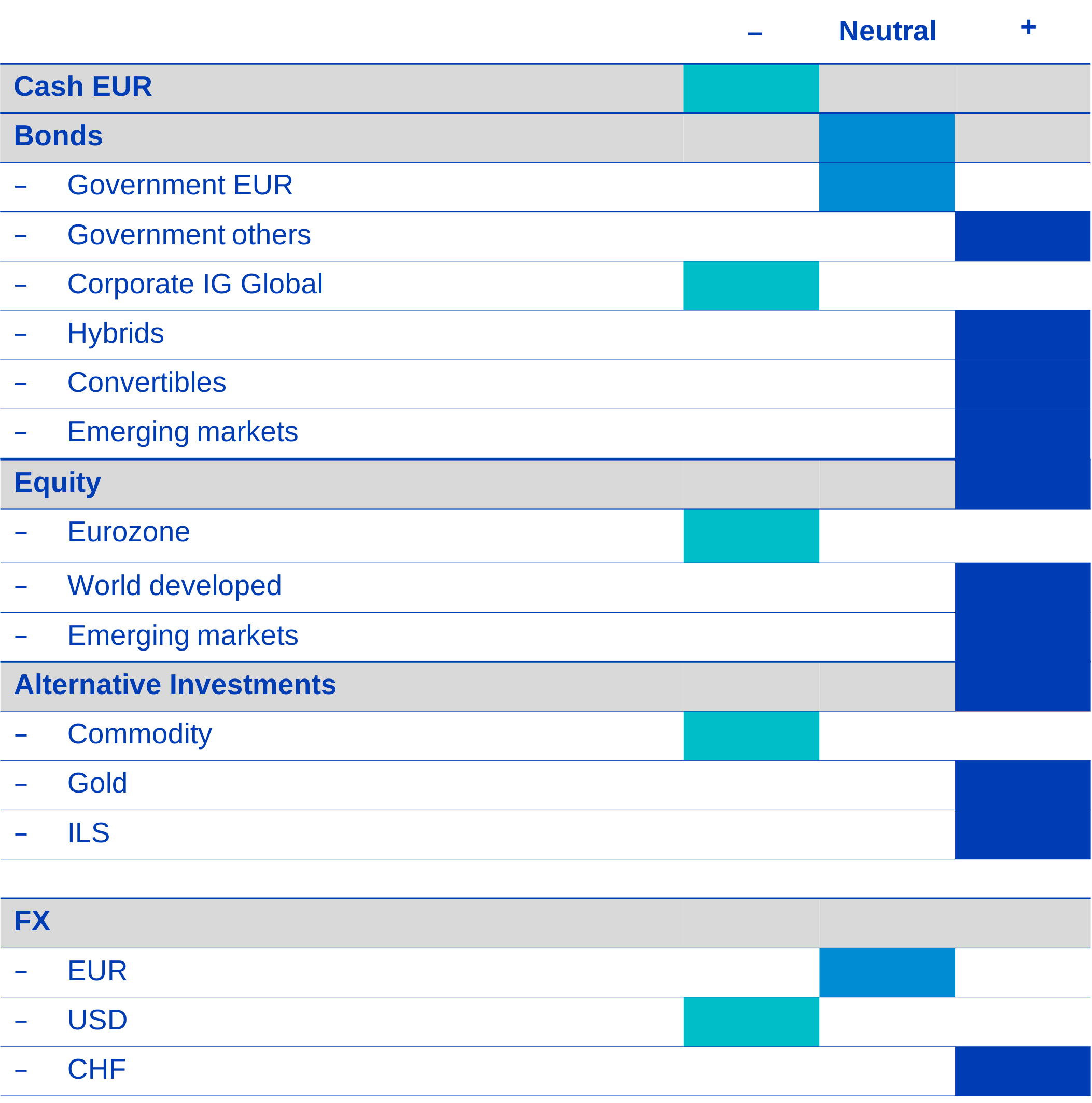
Strategic asset allocation is a key driver of investment success. While it should generally be long-term in nature, we believe regular reviews are essential. It often pays off to adjust focus areas with a medium-term perspective. Based on our expectations for 2026, we recommend placing greater emphasis on equities outside of the Eurozone and increasing allocations to ILS and precious metals. Given the low spread on corporate bonds, we would favour government bonds over corporate bonds. The Swiss franc is expected to remain strong and gain further against the USD.
Our Positioning for 2026
Legal notice
Legal notice
Legal notice regarding graphics:
“BLOOMBERG®” and the Bloomberg indices listed herein (the “Indices”) are service marks of Bloomberg Finance L.P. and its affiliates, including Bloomberg Index Services Limited (“BISL”), the administrator of the Indices (collectively, “Bloomberg”) and have been licensed for use for certain purposes by the distributor hereof (the “Licensee”). Bloomberg is not affiliated with Licensee, and Bloomberg does not approve, endorse, review, or recommend the financial products named herein (the “Products”). Bloomberg does not guarantee the timeliness, accuracy, or completeness of any data or information relating to the Products.