Arguments as strong as steel for investing in the Circular Economy
What is the most recycled material in the world? The correct answer isn’t PET plastic or aluminium – it’s steel. Once a challenge for investors, the sector is now back in the spotlight. Geopolitical developments and the AI boom are among the driving forces behind this resurgence. Companies focusing on circular processes present particularly exciting opportunities, emphasise Cezara Lozneanu and Yohann Terry.
Authors Cezara Lozneanu and Yohann Terry

Key points about steel as an example of new drivers in the Circular Economy
- Strategic importance amid geopolitical turbulence: Nations increasingly view steel as strategically vital for economic independence.
- Protectionism meets regional demand: Measures like import tariffs are coinciding with rising regional demand, creating structural support for the steel industry, particularly in the US and EU.
- Cleaner production methods on the rise: Emission-reducing processes like Electric Arc Furnace (EAF) technology are gaining traction. EAF furnaces can be fed with up to 100% scrap metal, making investments in EAF production and metal recycling prime examples of Circular Economy opportunities.
When Canada declared a verbal "war" on the United States, geopolitical tensions undoubtedly reached a new high. Despite their close ties as neighbours, the two countries have recently exchanged threats – and imposed tariffs and counter-tariffs. A key target of the disputes is a commodity of significant importance to both economies: steel shipments in both directions have been subjected to import tariffs of 50%, as reported amongst others by the American TV network CNN.
Trade disputes and rising demand revive stagnant steel sector
The steel dispute between these North American neighbours exemplifies the shifting dynamics in the steel industry. After years of lukewarm demand, intense competition from China, and high capital costs, the sector is now split in different regions with their own supply-demand dynamics. Politically motivated economic protectionism, the relentless push for an energy transition, and the construction boom in AI data centres and infrastructure projects are driving steel prices – and, consequently, producer margins – higher, particularly in the US and Europe.
Steel: Moving towards circular processes
In our view, investors who are interested in sustainability, in particular, would be well advised to take a closer look. While steel production is often associated with a soot-laden heavy industry, cleaner production processes have already made significant inroads (see box below). What’s more: according to the industry association Responsible Steel, steel is the most recycled material of all, with an average of 630 million tonnes (megatonnes, Mt) of scrap processed annually and a recycling rate of around 85 per cent. Steelworks are, by their very nature, recycling plants; they are often supplied exclusively with scrap metal.
Steel thus also serves as a prime example of the sustainable concept of the Circular Economy, which seeks to decouple economic growth from resource consumption in accordance with the four Rs: ‘Reduce, Recycle, Reuse, Replace’. Depending on the source, this paradigm shift is projected to generate long-term growth potential of up to USD 4.5 trillion. The Circular Economy is also recognised for supporting multiple UN Sustainable Development Goals (SDGs).
EAF steelmaking: Lower emissions – and valuable dust
Steel production has a reputation for being a major polluter. Yet even here, lower-emission processes are gaining ground. By the end of 2024, electric arc furnaces (EAF) were already accounting for 30.3 per cent of global production, 4 percentage points more than in 2024, as stated by the global trade association for the steel industry Worldsteel. EAF plants are also fed with up to 100 per cent scrap and melt it using electricity. This contrasts with the predominant blast furnace–basic oxygen furnace (BF-BOF) process, which converts iron ore into crude steel using coke and lime and still accounted for 69.4 per cent of global production in 2025. In this process, scrap is only added to a limited extent – up to 20 per cent of the metal charge – which limits its value for the Circular Economy.
The EAF process is clearly cleaner, with emissions of approximately 0.67 tonnes of CO₂ per tonne of steel produced, compared with around 2.3 tonnes of CO₂ per tonne from the BF-BOF process. It is also more cost-effective, as according to Worldsteel the use of scrap means that, on average, around 1.4 tonnes of iron ore can be saved per tonne of crude steel. However, the EAF process is more sensitive to fluctuations in scrap and electricity costs. Europe and the US are leading the way in the adoption of EAF technology – in the EU, as part of the ‘Green Deal’, there are plans to increase the share from around 45 per cent in 2023 to around 57 per cent by 2030, states the trade organization South East Asia Iron & Steel Institute SEAISI. China, which still accounts for more than 50 per cent of global steel production, continues to rely on the BF-BOF process for around 90 per cent of its output.
Electric arc furnace (EAF) steel production also generates zinc-containing dust, creating a niche for secondary recycling that is directly linked to EAF utilisation rates rather than to scrap prices themselves. Like steel itself, zinc is a critical mineral and a fundamental building block for clean energy and decarbonisation.
Steel as a prime example of the strategic importance of the Circular Economy
In the context of trade disputes, competition for critical raw materials, and the trend towards deglobalisation, circular processes are taking on a new and equally vital role. By keeping essential resources within the system, the Circular Economy can significantly contribute to resource security and economic independence for nations. This is one of the reasons we anticipate above-average growth in circular business models.
Few industries illustrate this "new narrative" of the Circular Economy as vividly as the current resurgence of steel production in the US and Europe. While China is currently rationalising its production, both regions are seeking to protect domestic production centres and jobs through trade barriers and tariffs. This politically driven disruption of global supply chains is driving up regional steel prices, encouraging the construction of local steel production capacities. In the case of EAF technology, this also aligns with the sustainable goal of decarbonisation. Below, we delve into these regional developments in more detail:
US: Tariffs and a focus on scrap as drivers for more sustainable steel production and the Circular Economy
- Tariffs as a catalyst for recycling: Tariffs imposed by the administration of US President Donald Trump – currently supported by Section 232 of the US Trade Expansion Act – levy duties of 25% to 50% on foreign steel imports. These measures protect domestic producers from competition, particularly EAF steel plants. Given the current political climate, we do not anticipate changes to these measures in the next two years, which could support the growth of US EAF manufacturers like Steel Dynamics (see below).
- Expansion of EAF facilities: In the US, producers such as Nucor, Commercial Metals Company (CMC), Steel Dynamics and US Steel are currently building new EAF capacities for over 17 mt, according to company announcements. Since EAF plants can be fed with up to 100% scrap metal, this serves as a structural driver for the recycling of scrap metal. We expect the US to significantly expand its scrap recycling capacities to prevent a potential scrap shortage.
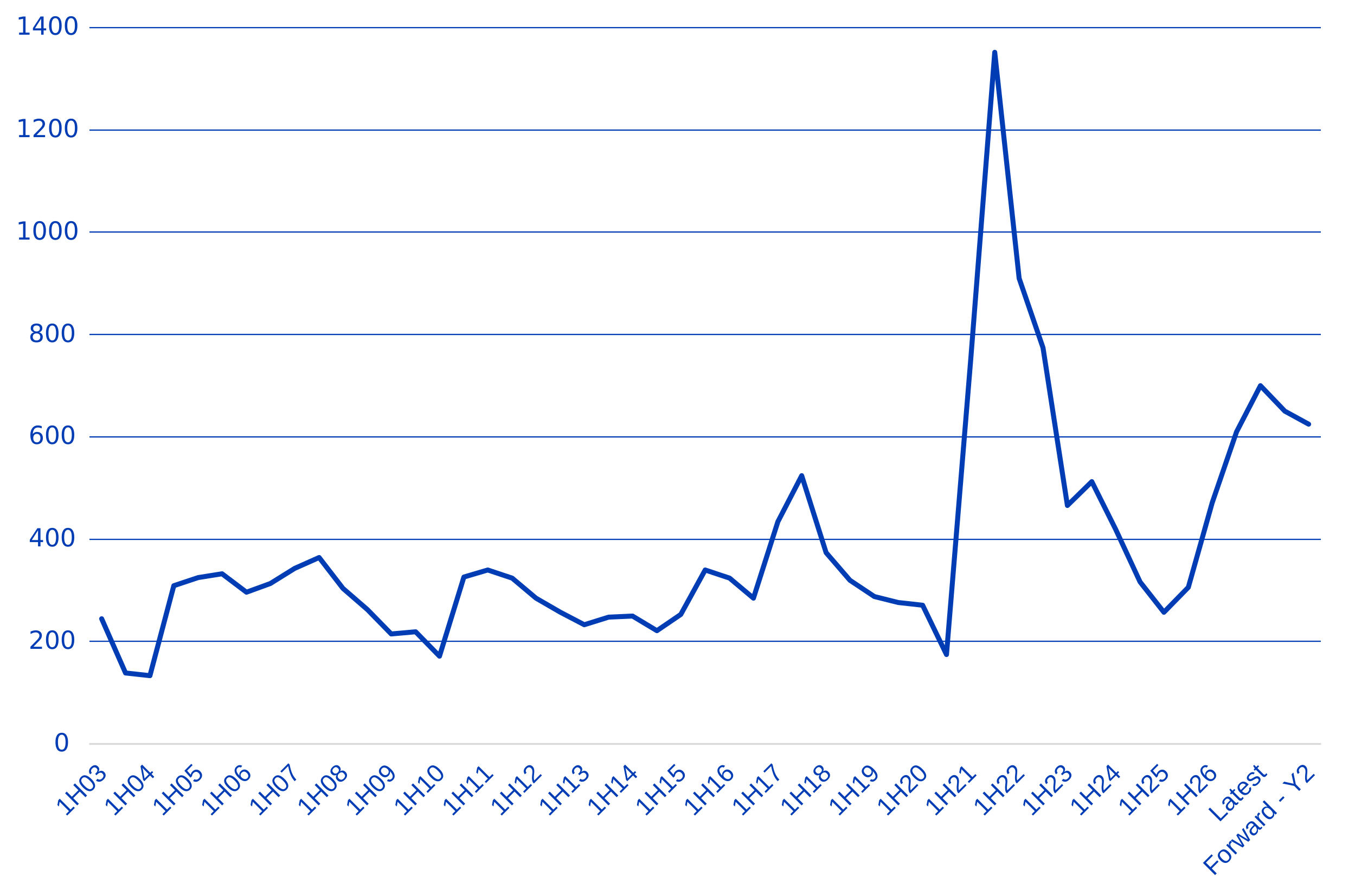
- Demand trends support prices: Pent-up demand driven by government-initiated growth and infrastructure projects is likely to continue pushing steel prices higher. Additional demand comes from non-residential construction and the AI boom, where the construction of new data centres consumes vast amounts of steel. The spread between scrap metal as input material and rolled steel (HRC) is expected to remain high, pointing to structurally higher margins for steel producers (see chart below).
The trade tariffs and improving demand have led to an increase in the margin of the steel sector in the US (Price difference between scrap and finished HRC steel from EAF mills in the USA, in USD on a 100 per cent basis)
Europe: The EU is raising trade barriers and emissions prices – but it faces a handicap
- New tariffs and quotas effective since summer: The EU has also moved to shield domestic steel production through trade barriers. As of 1 July 2026, Regulation 2026/1384 came into effect across the Union: the duty-free quota for finished steel imports was reduced to 18.3 mt annually, 47% less than in 2024. The tariff rate outside the quota was doubled to 50%. The European Commission has also considered restricting the export of steel scrap to retain this increasingly strategic raw material within the EU.
- Carbon Border Adjustment Mechanism (CBAM): Effective since early 2026, CBAM imposes a carbon price on certain imported goods from non-EU countries. In practice, CBAM adds costs to steel imports, favouring domestic EAF production, which generates fewer emissions.
- High electricity prices as a handicap: Compared to the US, the competitiveness of the European steel industry remains constrained by electricity prices that are more than double those in the US, as well as limited availability of high-quality scrap suitable for automotive and electrical steel. As a result, tariffs alone cannot close the competitive gap.
Drivers of the Circular Economy: Expected EAF capacities in Europe (in million tons mt)
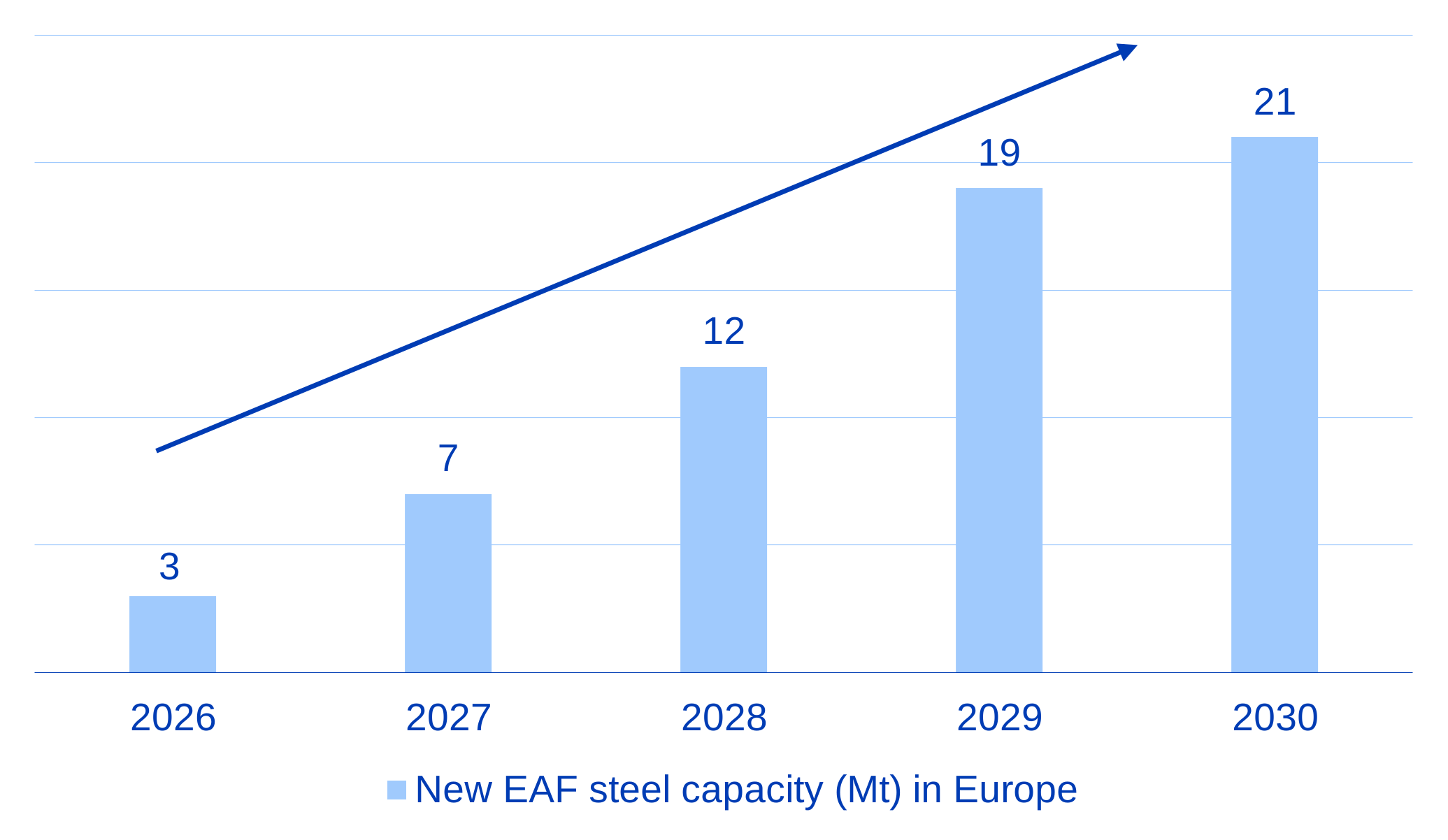
The combination of the spread of more sustainable production processes and recycling, together with the protection of domestic industry through tariffs and regulations, is providing significant momentum for companies that have already managed to position themselves accordingly. This can be illustrated, for both the US and Europe, by two companies that are also regarded as key players in the Circular Economy.
Company example: Befesa
- Description: An important company specialising in the recycling of hazardous waste – mainly zinc – from the steel and aluminium industries. The company processes around 1.9 mt of waste annually and produces approximately 1.7 mt of new materials from it, making Befesa a flagship company in the Circular Economy.
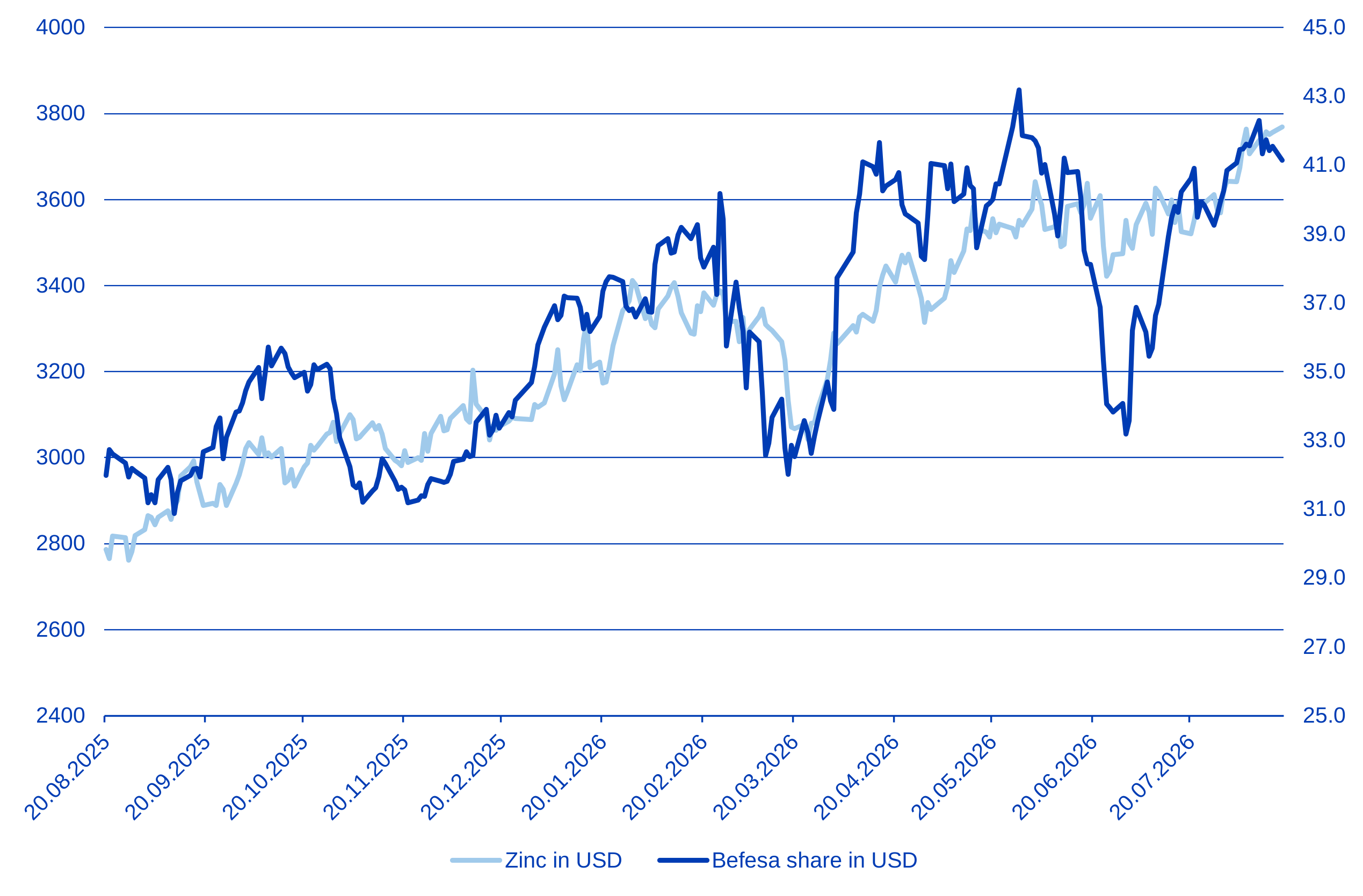
- Key business segments: According to the company’s figures (as at end 2025), steel dust recycling accounts for 67 per cent of turnover and 87 per cent of operating profit (EBITDA). Befesa recycles hazardous EAF steel dust into rolling oxide, which is sold to zinc smelters. The profitability of the steel dust segment is therefore directly linked to zinc prices (see also the chart below). Zinc is also regarded as a critical mineral and is currently experiencing rising demand, partly due to the energy transition.
- Impact of deglobalisation: The expansion of EAF facilities in the USA and Europe, driven by tariffs, is a direct and structural driver of volume growth. Revenues, in turn, depend on EAF capacity utilisation and throughput, not directly on steel or scrap prices. A second positive impact on earnings stems from higher zinc prices. Here, too, supply chain issues, geopolitical unrest and construction activity in the US are driving the trend.
Befesa's share price has recently benefited from higher zinc prices (zinc price and Befesa’s share price, in USD)
Company example: Steel Dynamics
- Description: Steel Dynamics is an important steel producer, processor and metal recycler (including steel and aluminium) in the US. The company uses exclusively EAF furnaces for steel production, with recycled iron scrap as the main raw material.
- Key business segments: In addition to its leading position in the steel sector, Steel Dynamics has invested heavily in aluminium recycling. The company is in the start-up phase of a new plant for flat-rolled products made from recycled aluminium with a capacity of 650,000 tonnes; this initiative is aimed, amongst other things, at the markets for beverage cans and the automotive industry. The aluminium business is increasingly regarded as Steel Dynamics’ most important long-term growth driver.
- Impact of deglobalisation: The current US import tariffs under Section 232 protect the prices of Steel Dynamics’ (domestic) finished steel, whilst the company’s own metal recycling division supplies its EAF plants. Thanks to its vertical integration, the company is better protected against fluctuations in scrap costs than pure steelworks. In our view, this dual safeguard grants Steel Dynamics the status of a safe haven in markets characterised by geopolitical turbulence.
Legal notices
Legal notices
Legal notice regarding the chart:
“BLOOMBERG®” and the Bloomberg indices listed herein (the “Indices”) are service marks of Bloomberg Finance L.P. and its affiliates, including Bloomberg Index Services Limited (“BISL”), the administrator of the Indices (collectively, “Bloomberg”) and have been licensed for use for certain purposes by the distributor hereof (the “Licensee”). Bloomberg is not affiliated with Licensee, and Bloomberg does not approve, endorse, review, or recommend the financial products named herein (the “Products”). Bloomberg does not guarantee the timeliness, accuracy, or completeness of any data or information relating to the Products.
Legal notice Switzerland:
This document is for information and advertising purposes only. It is intended for distribution in Switzerland and is not intended for investors in other countries.
It does not constitute an offer or a recommendation to purchase, hold or sell financial instruments or to obtain products or services, nor does it form the basis for a contract or an obligation of any kind. The recipient is advised to review the information, possibly with the assistance of an advisor, to determine its compatibility with their personal circumstances as well as its legal, regulatory, tax, and other implications. The information contained in this publication may be adjusted at any time.
The document was prepared by Zürcher Kantonalbank with customary due diligence and may contain information from carefully selected third-party sources. However, Zürcher Kantonalbank provides no warranty as to the correctness and completeness of the information contained therein and accepts no liability for damages resulting from the use of the document or information contained therein.
Unless otherwise stated, the information refers to Zürcher Kantonalbank's asset management under the Swisscanto brand, which primarily includes collective capital investments under Swiss, Luxembourg and Irish law (hereinafter referred to as "Swisscanto funds").
The investment opinions and assessments of securities and/or issuers contained in this document have not been prepared in accordance with the rules on the independence of financial analysts and therefore constitute marketing communications (and not independent financial analysis). In particular, the employees responsible for such opinions and assessments are not necessarily subject to restrictions on trading in the relevant securities and may in principle conduct their own transactions or transactions for Zürcher Kantonalbank in these securities.
The sole binding basis for purchasing Swisscanto funds is the current fund documents (e.g. fund agreements/contractual conditions, prospectuses, key investor information or basic information sheets as well as annual reports), which can be obtained from products.swisscanto.com/, Swisscanto Fund Management Company Ltd., Bahnhofstrasse 9, CH-8001 Zurich (also representative of the Luxembourg Swisscanto funds) or from all branch offices of Zürcher Kantonalbank. The paying agent for the Luxembourg Swisscanto funds in Switzerland is Zürcher Kantonalbank, Bahnhofstrasse 9, CH-8001 Zurich.
Carne Global Fund Managers (Schweiz) AG is the representative for funds domiciled in Ireland. Zürcher Kantonalbank is the paying agent for the Irish Swisscanto funds in Switzerland and Luxembourg funds.
It should be noted that any information about historical performance does not indicate current or future performance, and any performance data provided may not consider the commissions and costs incurred when issuing and redeeming fund units. Any estimates regarding future returns and risks contained in the document are for informational purposes only. Zürcher Kantonalbank does not provide any guarantee for this.
Every investment involves risks, especially with regard to fluctuations in value and return.
In terms of any sustainability information, please note that there is no generally accepted framework or list of factors in Switzerland that has to be considered in order to ensure the sustainability of investments.
For Irish and Luxembourgish Swisscanto funds, information on sustainability-related aspects in accordance with the Disclosure Regulation (EU) 2019/2088 is available at products.swisscanto.com/.
The products and services described in this publication are not available to US persons in accordance with the applicable regulations. This publication and the information contained in it must not be distributed and/or redistributed to, used or relied upon by, any person (whether individual or entity) who may be a US person under Regulation S of the US Securities Act of 1933. US persons include any US resident; any corporation, company, partnership or other entity organized under any law of the United States; and other categories set out in Regulation S. Status of the data (unless otherwise stated): 03.2025
© 2026 Zürcher Kantonalbank. All rights reserved.
Legal notice international
This document only serves advertising and information purposes and is not directed at persons in whose nationality or place of residence prohibit access to such information under applicable law. Where not indicated otherwise, the information concerns the collective investment schemes under the law of Luxembourg managed by Swisscanto Asset Management International S.A. (hereinafter "Swisscanto Funds"). The products described are undertakings for collective investment in transferable securities (UCITS) within the meaning of EU Directive 2009/65/EC, which are governed by Luxembourg law and subject to the supervision of the Luxembourg supervisory authority (CSSF).
This document does not constitute a solicitation or invitation to subscribe or make an offer to purchase any securities, nor does it form the basis of any contract or obligation of any kind. The sole binding basis for the acquisition of Swisscanto Funds are the respective published legal documents (management regulations, sales prospectuses and key information documents (PRIIP KID), as well as financial reports), which can be obtained free of charge at products.swisscanto.com/. Information about the sustainability-relevant aspects in accordance with the Regulation (EU) 2019/2088 as well as Swisscanto's strategy for the promotion of sustainability and the pursuit of sustainability goals in the fund investment process are available on the same website.
The distribution of the fund may be suspended at any time. Investors will be informed about the deregistration in due time.
The investment involves risks, in particular those of fluctuations in value and earnings. Investments in foreign currencies are subject to exchange rate fluctuations. Past performance is neither an indicator nor a guarantee of future success. The risks are described in the sales prospectus and in the PRIIP KID.
The information contained in this document has been compiled with the greatest care. Despite professional procedures, the correctness, completeness and topicality of the information cannot be guaranteed. Any liability for investments based on this document will be rejected.
The opinions and assessments contained in this document regarding securities and/or issuers have not been prepared in accordance with the regulations governing the independence of financial analysts and therefore constitute marketing communications (and not independent financial analyses). In particular, the employees responsible for such opinions and assessments are not necessarily subject to restrictions on trading the relevant securities and may, in principle, conduct their own transactions in these securities.
The document does not release the recipient from his or her own judgment. In particular, the recipient is recommended to check the information for compatibility with his or her personal circumstances as well as for legal, tax and other consequences, if necessary, with the help of an advisor. The prospectus and PRIIP KID should be read before making any final investment decision.
An overview of investors' rights is available at swisscanto.com/int/en/legal/summary-of-investor-rights.html.
The products described in this document are not available to U.S. persons under the relevant regulations (in particular Regulation S under the U.S. Securities Act of 1933). Data as at (where not stated otherwise): 03.2025
© 2026 Swisscanto Asset Management International S.A. All rights reserved