Swisscanto CIO Survey 2nd Half of 2026: Oil Price Shock Over, Focus on Tech & Gold
The Swisscanto CIO Survey for the second half of the year reveals that Chief Investment Officers (CIOs) from Swiss financial institutions consider the oil price shock to be behind us and remain firmly committed to real assets.

No comeback of the oil price above 100 dollars, no jitters: Chief Investment Officers (CIOs) at Swiss financial institutions consider the oil price shock to be over and continue to take a determined stance on real assets.
This is shown by the second edition of the Swisscanto CIO Survey. In it, the CIOs surveyed assess the outlook for various asset classes and set out their asset allocation for the next six months. The survey provides valuable insights into the positioning and market views of Swiss financial institutions.
- Loved vs avoided: Despite a 25 per cent correction since January and the expected end of the war in Iran, gold remains the most popular asset class among Swiss CIOs, while CHF bonds are being shunned across the board.
- Sentiment: The majority of CIOs surveyed are optimistic and around half are increasing their equity exposure in their portfolios. Compared with the end of 2025, however, equity allocations have declined slightly, particularly for Swiss equities.
- Surprise: Despite the war in Iran, no CIO is expecting a renewed rise in the oil price to above USD 100 – and yet around one third are overweight commodities.
Surprise: War in Iran already ticked off by CIOs
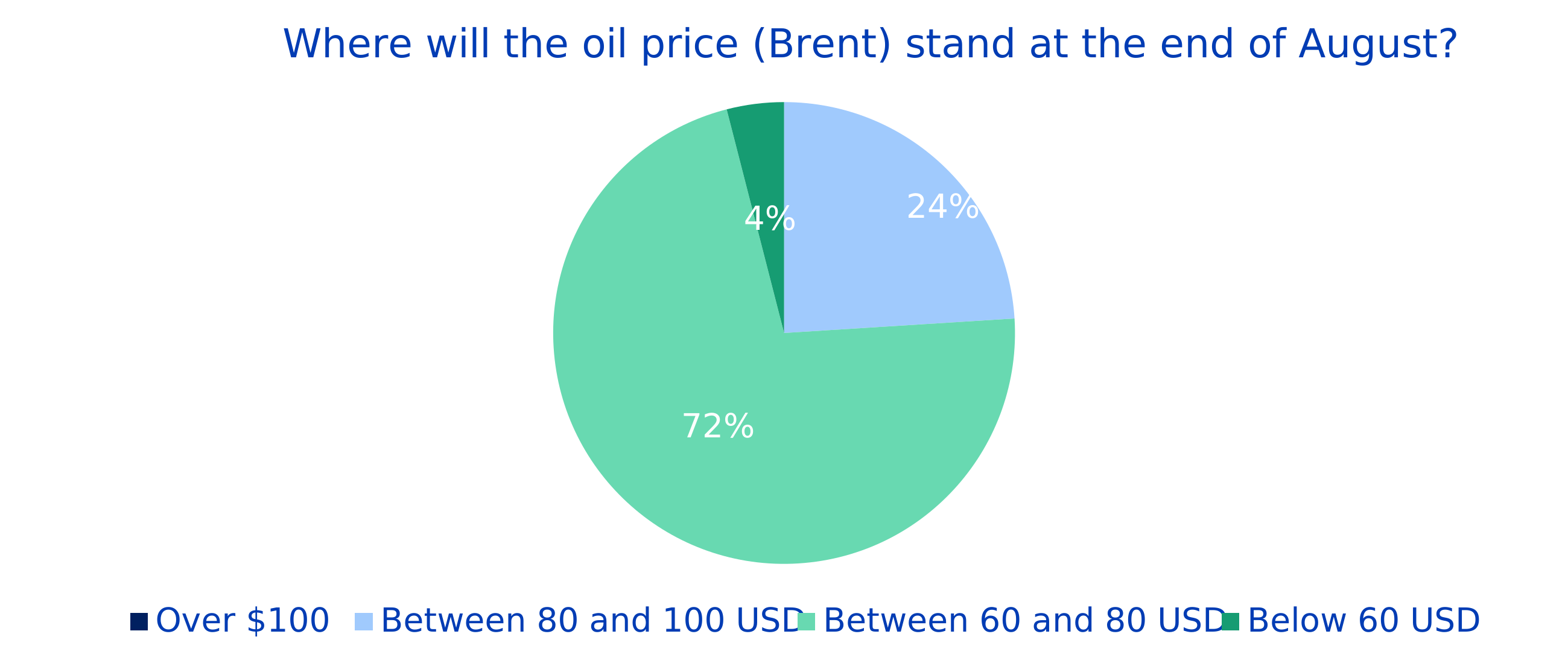
With regard to their oil price forecasts, the respondents already seem to see the war in Iran as over. None of the CIOs expects the oil price to rise again to above USD 100. This is surprising, as peace negotiations are currently making slow progress and renewed escalation cannot be ruled out. A clear majority of survey participants expect the oil price to settle in a range of USD 60 to USD 80 per barrel (see Figure 1). For comparison: before the outbreak of the Iran conflict, a barrel traded at around USD 70.
No global rate‑hike cycle yet
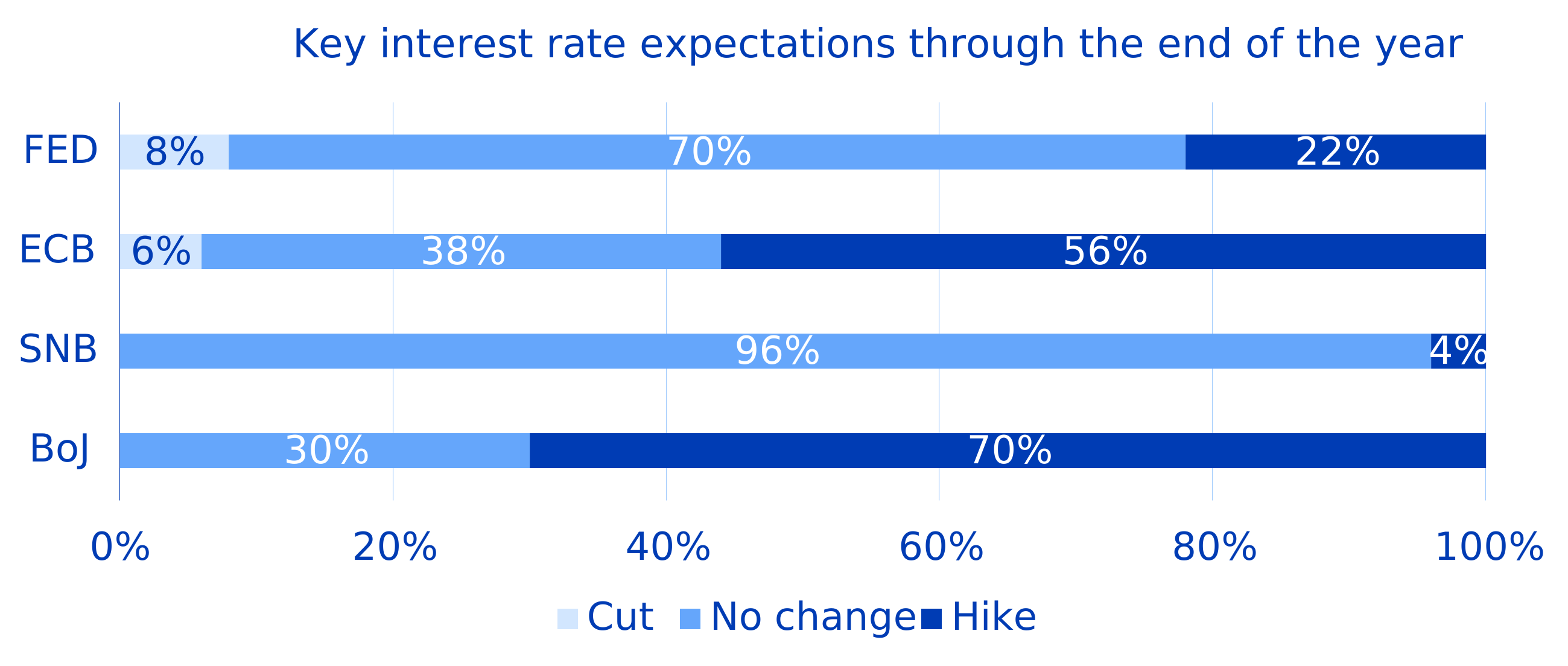
In line with this, only 22 per cent of CIOs expect the US Federal Reserve to raise interest rates by the end of the year. This is remarkable given that financial markets are currently pricing in up to two rate hikes by year‑end. "The risk of inflation as a result of rising oil prices is therefore apparently viewed as less severe by Swiss CIOs", says Nicola Grass, responsible for the Swisscanto CIO Survey and Senior Portfolio Manager in Asset Management at Zürcher Kantonalbank. In contrast, a majority of respondents expect a further rate hike from the European Central Bank and the Bank of Japan (see Figure 2), which is in line with current market expectations. For the Swiss National Bank, however, the consensus view is for policy rates to remain unchanged. For the respondents, one thing thus appears clear: although the global rate‑cutting cycle has ended, a seamless transition into a new global rate‑hiking cycle remains uncertain.
The yen storms into second place
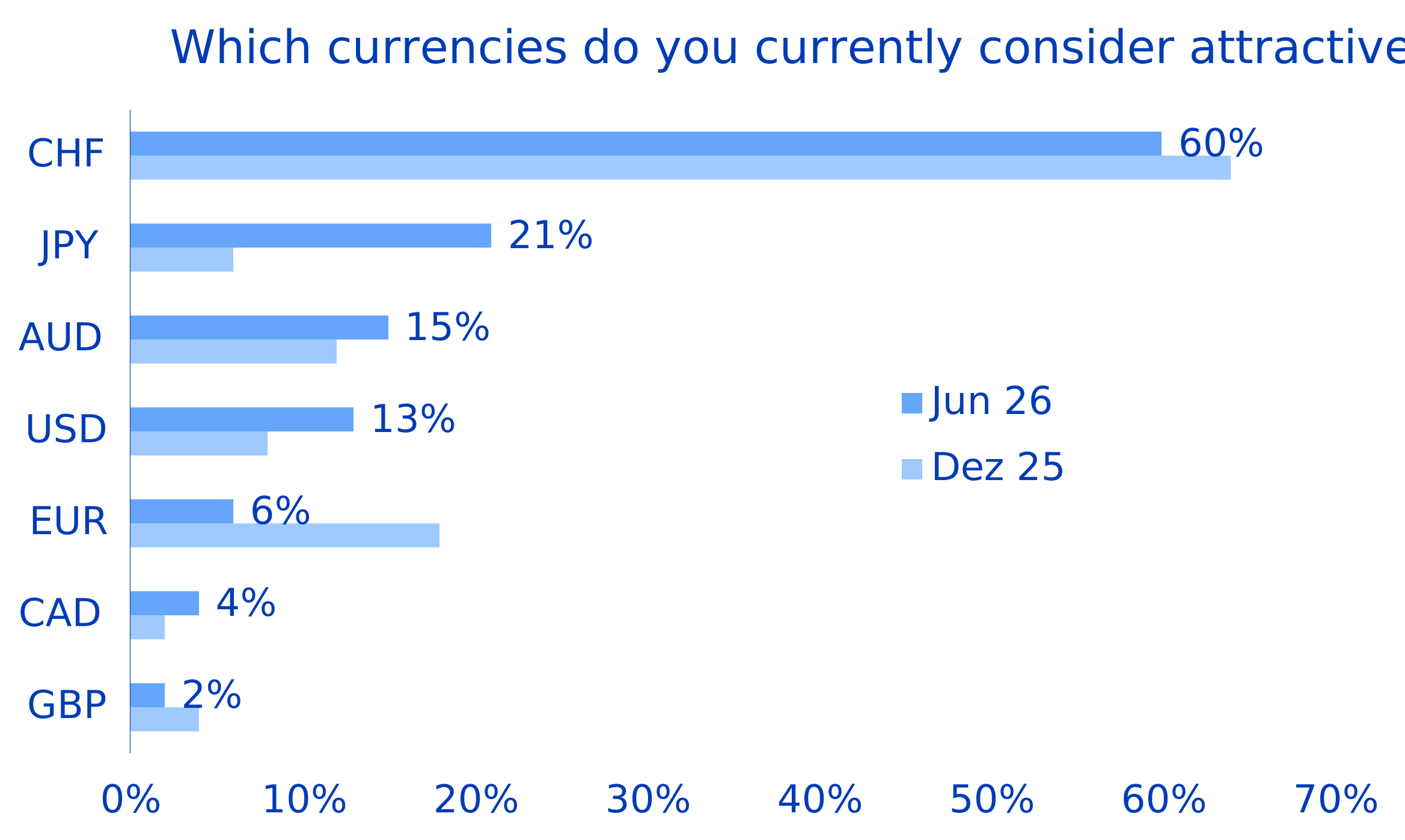
The interest rate differential is therefore likely to increase, tending to the disadvantage of the Swiss franc. Nevertheless, 60% of CIOs continue to regard the Swiss franc as the most attractive currency (see Figure 3). The big climber compared with the last survey is the Japanese yen, which is now considered the most attractive currency by 21% of respondents. This is likely related to its very favourable valuation and the expected interest rate hikes. In contrast, the euro is the big loser, as it is now viewed as attractive by only 6% of CIOs (vs. 18% in December 2025), despite the ECB having raised interest rates. The reason for this is likely to lie in the significantly weaker economic outlook.
Loved: gold remains the favourite
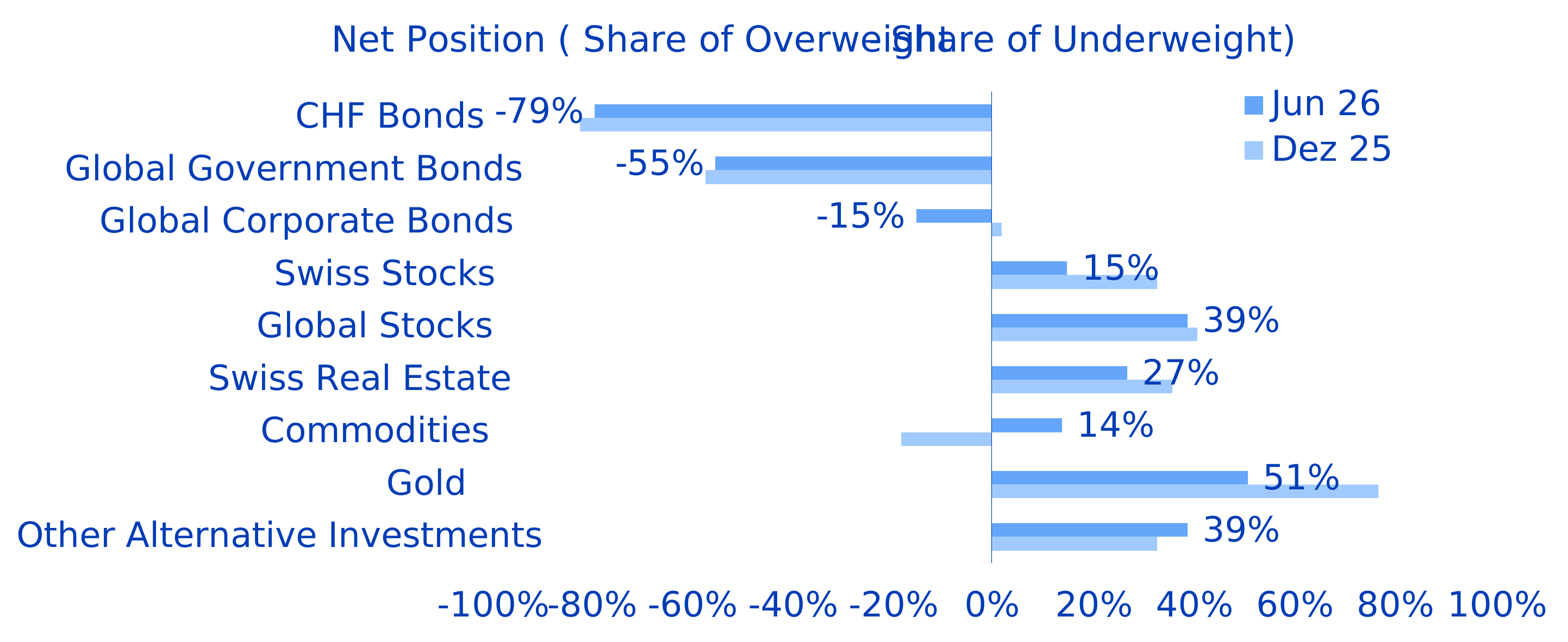
The survey results show that preferences for real assets at the expense of bonds have hardly changed compared with the end of 2025 (see Figure 3). This is despite the fact that bond yields abroad have risen significantly again as a result of the war in Iran and global equities have already gained around 10 per cent since the beginning of the year.
Gold remains by far the preferred asset class, even though the degree of overweighting is less pronounced than at the end of 2025. Currently, 57 per cent of CIOs are overweight gold relative to their own strategic allocation and only 6 per cent are underweight. This results in a net positioning of 51 per cent compared with an impressive 77 per cent in the previous survey (see Figure 3). Despite a price correction of 25 per cent since January, almost 90 per cent of respondents do not expect any further significant price decline in the second half of the year.
Also loved: emerging markets and the US
Within the "Global Equities" asset class, respondents again prefer emerging markets and the US. This is likely to be primarily due to the high weighting of technology stocks in these indices. CIOs thus expect the AI‑driven price rally to continue.
Overall, confidence among respondents appears to have eased slightly, which is reflected in a more neutral positioning relative to their own strategic allocation in several asset categories. Notable is the high proportion of neutral assessments for Swiss equities. The domestic equity index, with its high weighting in the defensive healthcare and consumer staples sectors, appears to be less in demand in the current environment.
Avoided: government bonds remain sidelined
The combination of high government debt levels, rising inflation rates and the persistently low‑interest‑rate environment in Switzerland once again led to meagre bond returns in the first half of the year. CIOs are therefore continuing, by an overwhelming majority, to underweight CHF bonds and global government bonds. These figures are virtually unchanged from the first survey in December 2025. Little is likely to change in this respect for CHF bonds by the next survey, especially as only one CIO expects the yield on Swiss government bonds to rise above 0.6 per cent.
Also avoided: European equities
Within the "Global Equities" asset class, European equities remain out of favour. The decisive factor is the comparatively weaker earnings development of companies which – not least due to higher energy prices and a significantly lower share of firms along the AI value chain – cannot keep pace with their US counterparts.
Between AI euphoria and correction fears
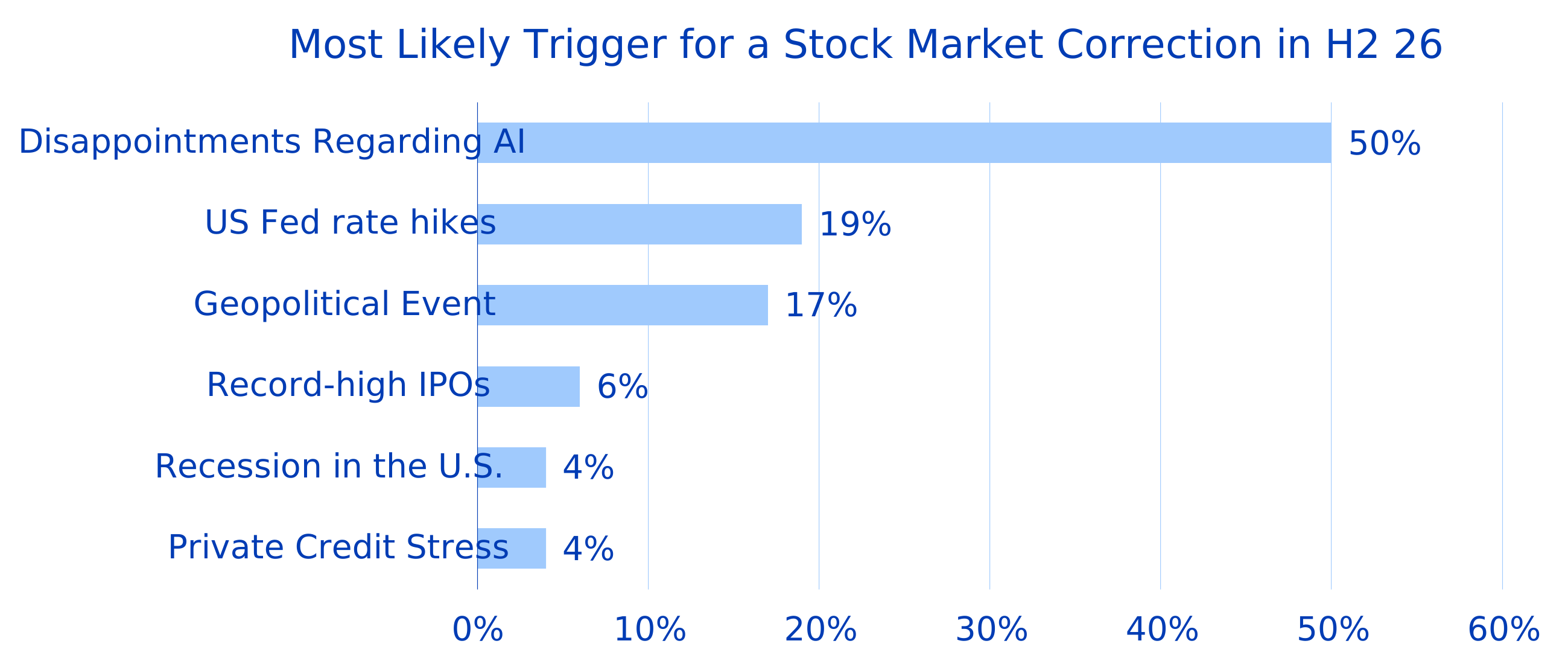
Despite their preference for technology stocks, CIOs see disappointments related to artificial intelligence as the most likely trigger for an equity market correction in the second half of the year (see Figure 4). The strong AI rally is thus seen by respondents as a major risk, while at the same time they continue, for the time being, to expect rising prices. It is also interesting that only 4 per cent of respondents anticipate a recession in the US – a picture that is consistent with the underweighting of government bonds. A pronounced slowdown in growth would therefore catch the vast majority of CIOs on the wrong foot.
Conclusion
Although confidence has eased slightly compared with the end of 2025 and positioning is less pronounced, Swiss CIOs remain optimistic and are betting on continued momentum in technology stocks and gold. A key factor here is likely to be the easing of the oil price situation, which is why no immediate transition from a global rate‑cutting cycle to a new rate‑hiking cycle is expected in the short term.
What did Swiss chief investment officers focus on or avoid in the first half of 2026? Find the answers here.
About the survey
About the survey
The Swisscanto CIO Survey is conducted semi‑annually by the Multi Asset Solutions division of the Asset Management of Zürcher Kantonalbank. The survey provides a structured and systematic insight into the market assessments of Swiss Chief Investment Officers (CIOs) and is based mainly on a set of recurring questions.
The survey was conducted between 16 and 23 June 2026. A total of 140 CIOs were invited to participate, of whom 50 took part in the survey. The survey observation period refers to a six‑month outlook and covers various aspects of market assessment.
Participating institutions include, among others: Aargauische Kantonalbank, Baloise Asset Management, Banque Cantonale du Jura, Banque Cantonale Neuchâteloise, Berner Kantonalbank, Basellandschaftliche KB, Colombo Wealth SA, Elite Asset Management, Eric Sturdza Asset Management, Forum Finance, Glarner Kantonalbank, Globalance Bank, Graubündner Kantonalbank, Group Mutuel Asset Management, Habib Bank AG Zurich, Liechtensteinische Landesbank LLB, Lienhardt & Partner, Luzerner Kantonalbank, Migros Bank, Mirabaud, Numan Wealth Partners, ODDO BHF Schweiz, Pictet Asset Management, Probus Pleion, Rahn+Bodmer, Raiffeisen, Schaffhauser Kantonalbank, Schroder & Co Bank AG, Schwyzer Kantonalbank, St. Galler Kantonalbank, Thurgauer Kantonalbank, Valiant Bank, VP Bank, Wyss Partner, Youplus Assurance Schweiz, Zuger Kantonalbank, Zürcher Kantonalbank und Zurich Invest AG.